Monday, September 20, 2021

Will Free-dom ruin Halo?

 Earlier this month 343 Studios announced that they would be trying a new tact with Halo; multiplayer in Halo: Infinite is going to be free to play. 

Cue my college budget reaction...                         Followed by...



What would this mean for the Halo I know and love? Would things change? Fortunately, it appears that 343 did their homework, and they are not going the route of many Free to Play mobile games that optimize on finances. Instead, Halo: Infinite is set up to engage new users and widen the Halo diehard community.


The post that follows will use the ideas of capital as outlined by Malaby [1] to outline a few of my primary concerns around how a F2P system might have changed the experience alongside discussion of how 343 is heading off my concerns at the pass.


Can we start with the fancy hats? I remember back when I started playing multiplayer in Halo that I never had the coolest hat which was honestly just as well because it meant no one expected anything of me. Not only did I only play as a guest(1), which meant I could never actually have my own rank, but I never had anything to show for my progress. We had one Live account at home, and it was shared. Because of this, I was not able to take part in collecting cultural capital in the form of custom loadouts that could signal my expertise.


Having armor as a status symbol makes certain decisions easier within the multiplayer game universe. For example, if the Spartan with the flaming head came up and punched me for picking up the sniper, I wasn’t even mad. They were probably right on and going to do way more good with that than I was. If I had the ability to nab the Banshee before the enemy, I certainly would, but I would usually pass it off to the player who was better suited to use it than I was. I could pretend that these are moves of altruism, but it;s more akin to reciprocity where I’m expecting a win in return, or at the very least some cover fire while I try to make headway on the objective.


A shift to Free to Play often includes a “Pay to Play” (P2P) scenario where players can accelerate their ability to gain equipment and other artifacts (like cool armor) by pumping more real-world money into the game. While this is one thing when you’re vying for a top spot on a leaderboard, it’s another when you’re in a battle royale with other players, most of whom haven’t sold a kidney for the Christmas hat. Add in the potential for fancy equipment a ‘la the Warzone debacle of Roze Skin (made privy to me by another blog espousing Halo’s virtues), and I was worried for my safety.

I am already most likely to be used as a mobile spawn point for my Invasion partner. The increased likelihood of me dying, repeatedly from people who bought all the fancy stuff was bound to happen. Unfortunately, the degeneration of the status symbols also hold the potential of creating distrust in the system, and the system includes the players. If you can’t trust the artifacts that your teammates have, can you trust their competency with the power weapons? Doubtful.


Furthermore, the transition of "real world" money into the market capital of a game can greatly distort the power dynamic. It isn't a fair fight when some weapons greatly outperform others. In this way, the game begins to mimic the "real world" complete with privilege of being able to afford certain luxuries that perpetuate inequity in play.

343 seems to have headed this off at the pass by encouraging everyone to play their own game. By allowing players to progress their Battle Pass at their own pace with no expiration date, as well as assuring players that Battle Pass items will never appear in the store, Halo Infinite promises to level the proverbial playing field in terms of time and monetary investment [2].


Related to the ways we interact with perceived experts is the idea of social capital. While I am almost always playing split screen with my partner, we are very rarely in a party. We simply don’t know that many other people who play Halo. This is one of the challenging aspects of Halo as verbal communication seems to have fallen out of favor on the platform. Without a full party, it can be hard to get in sync with your team. Knowing who is going left and who is going right can make or break a match. Fortunately, the F2P model will allow more people to join in the fun. With a reduced buy-in threshold (reduced since you do still need to have Xbox Live Gold), it is likely that Halo Infinite will see a large growth in its fanbase. 


343 is planning for those players who are coming back to Halo after a long-term hiatus as well as those who are brand new to the franchise. The plan is for an AI Academy to exist as a player training bootcamp [3]. This removes the failure to launch scenario of those players who have limited connections to the fandom of the established franchise, essentially bypassing the need for social capital.


While I am super excited about a new Halo multiplayer opportunity, my concerns over the ways that F2P games change group dynamics by undermining the cultural transactions in a game have me a bit on edge. If 343 does manage to support the community of interactions within Halo Infinity to maintain the cultural capital that is present in earlier games, there will be the added byproduct of supported means of turning that into social capital through cooperation in multiplayer. If you're looking for me mid-December, you'll likely find me assuming my role as the spawner.


References

[1] Malaby T. (2006). Parlaying Value: Capital in and Beyond Virtual Worlds. Games and Culture. 1(2):141-162. doi:10.1177/1555412006286688

[2]Mercante, Alyssa. (2021) Halo Infinite multiplayer is doing free-to-play the right way. https://www.gamesradar.com/halo-infinite-multiplayer-is-doing-free-to-play-the-right-way/.

[3] https://www.halowaypoint.com/en-us/news/inside-infinite-september-2021 


Who needs a “first life” anyway?

I’m not sure we can simply dump our “first” life, otherwise known as the real world, but it’s a good thing we can build cultural capital within a second life as well. Where can you build a second life you may ask, well it could be in Second Life by Linden Lab, World of Warcraft (WoW) by Blizzard Entertainment, or really anywhere you so desire. When you first step into these types of new worlds, you may think they are simply virtual and completely distinct from the real world. Thomas Malaby in “Parlaying Value - Capital in and Beyond Virtual Worlds” suggests that the distinction might not be as large as you first imagined.


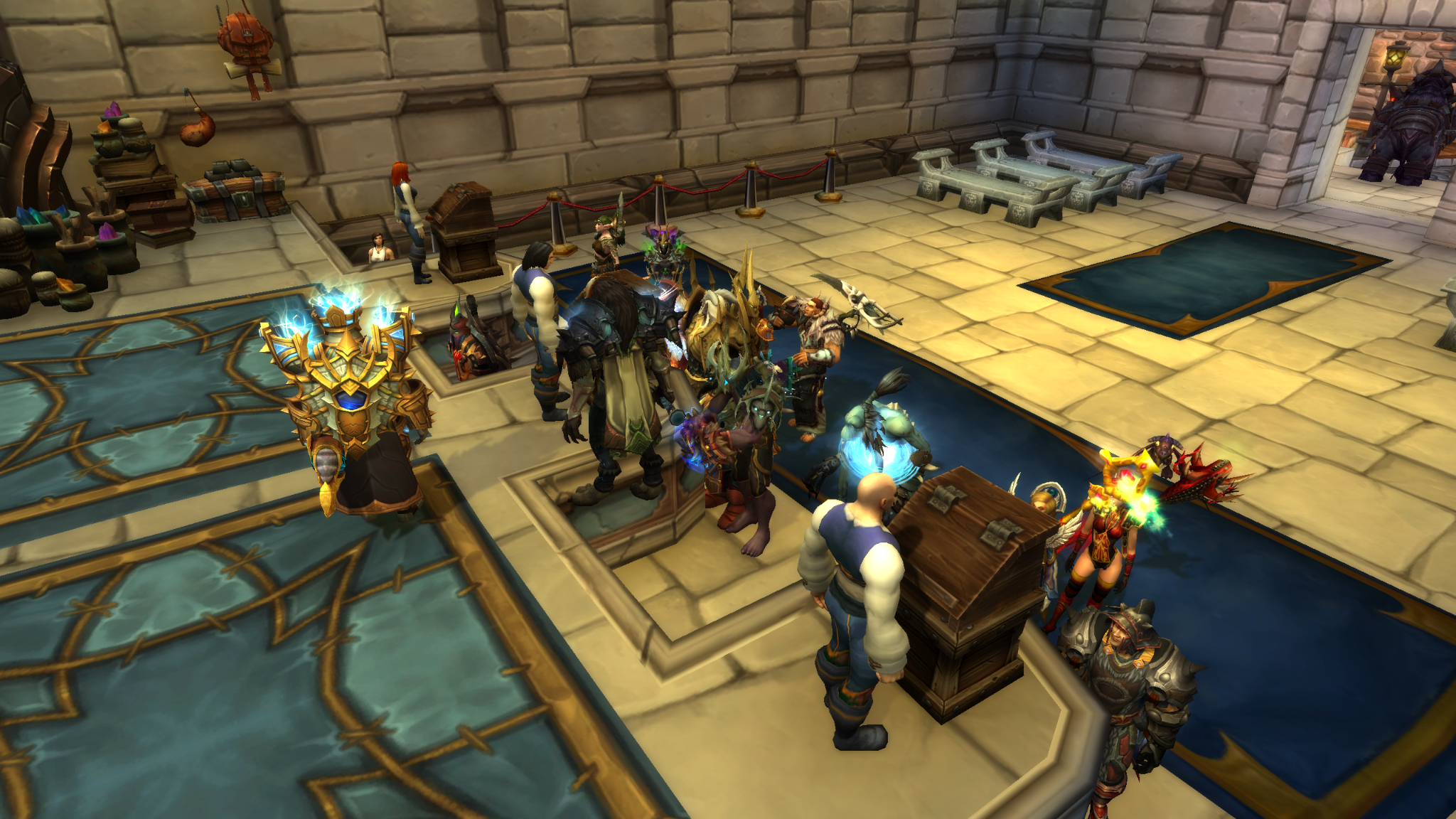
An image of the Stormwind auction house on the Sargeras Realm in World of Warcraft. You can see multiple players interacting with the economy and some just dancing with each other.
World of Warcraft - Stormwind Auction House - Sargeras Realm

Malaby suggests that it is understood that these virtual worlds allow generation and transferral of market and social capital, but the idea of cultural capital is not as well understood to be tied to these virtual worlds. To help bridge this gap, he instead uses the term “synthetic worlds” as they can be just as real in terms of human action and its results. Then he presents a new framework based around the existing parlaying of value between “domains of human action.” (Malaby 2006, 143), showcasing how the value generated from human action in these “synthetic worlds” is not much different than any other domain. 


To build this framework, Malaby provides background on various types of capital and provides examples from various “synthetic worlds”, primarily Second Life and WoW, in relation to the different kinds of capital. Capital is defined specifically as “a resource for action” (Malaby 2006, 146), all resulting from the resources of human capital, or what humans generate over long periods of time. This can easily be taken to mean the material resources generated, particularly if we look far enough back, but also the results from the shared experiences humans undergo. 


Due to the more complex nature of other forms of capital, market capital is perhaps the easiest to see and understand in the context of synthetic worlds, with some worlds, such as WoW having a clearly identified market which even presents “basic laws of supply and demand for desirable ‘virtual goods’” (Malaby 2006, 145). It’s larger than just that though, with the items being desired enough so that they are often auctioned or sold through online marketplaces like eBay. This is a direct example of capital crossing realms of human domain and finding meaning in what we may call the “real world”. Some of this results from the forced scarcity by developers, such as in the case of WoW, where items can sometimes take months to collect. That does not mean capital is only the result of scarcity though, in the case of Second Life, assets and creations can be copied and distributed easily. This is where the interweave between all forms of capital is introduced.


Social capital, “a resource that depends on the special qualities of reciprocity” (Malaby 2006, 153), also can be clearly outlined within “synthetic worlds”, with the most clear examples being social groups built directly into the worlds, such as guilds in WoW. Malaby suggests we need to look beyond these though, as social capital is about the “practices of reciprocity that sustain these networks” (Malaby 2006, 154), and not all social networks fit a strict criteria. Within any type of world, networks can be built for many types of reasons with many types of people, with one provided example being the discourse around WoW’s in-game marketplace. These connections can then be parlayed, for example into market capital, both in game and out. Perhaps the easier transfer to see though, may be into cultural capital, or status, such as Wagner James Au accomplished by providing free, virtual copies of his book during an event in Second Life. 


Cultural capital, which Malaby mentions as including “competencies, credentials, and artifacts” (Malaby 2006, 148) and defined as “the realization of what a given cultural group finds to be meaningful or important in bodies, objects, and offices” (Malaby 2006, 155), therefore is also present in these “synthetic worlds”. Not only is it generated, but it can be parlayed. In the case of the market in WoW, various players may have the skills and prestige to find players to help them find and create expensive items, that then can be seen as a commodity in terms of market capital. Cultural capital is all about the value and importance people give to things or to other people, which in the case of games, there is no lack of.


Competencies, perhaps the most clear form of cultural capital, result from learning and experience, which are aspects certainly not devoid from “synthetic worlds”. It may be hard to separate these from the avatar in the world, but Malaby suggests we should consider thinking about these competencies as not separate from those individually developed in other human domains. This can apply in the form of credentials as well, where an example of a notary in Second Life is provided, as what distinction really exists when this “virtual” notary must be trusted by those using their services? As for artifacts, these can exist in game but more tangible items that transcend the borders between human domains exist as well. Malaby provides the example of Linden Lab’s Second Life trading cards to illustrate this.


These cards highlight details of a person and their creation, pointing to the inherent capital that person’s actions generated, even in relation to their life in the “real world”. Tringo, a game created by Kermit Quirk within Second Life, was the topic of the specific trading card highlighted by Malaby. We can see the game’s market capital transcending boundaries, as the card highlights that the game was sold in game but also the rights for the game outside of Second Life were bought. This all started with the cultural capital, where Kermit used his skills as a systems analyst and programmer to become a sort of game developer in Second Life.  Social capital took over after that, with knowledge of the game spreading by word of mouth. From this “synthetic world”, Quirk gained market, social, and cultural capital from his creation. Then, the card documenting all of this, is a cultural artifact in its own way, drawing value from the context of its contents as cultural capital.

Overall, Malaby in this article succeeded in presenting a framework, based around the interplay of human actions between boundaries, that allows researchers to see these “synthetic worlds” as not necessarily distinct from our lives in the “real world”. The capital generated and parlayed is real and it’s not necessarily stuck in one world or limited to market value and social connections. He admits there are challenges in this analysis, due to “the increased scope these domains afford” (Malaby 2006, 160), but proper tools and frameworks like he laid out here will help bridge that gap between “synthetic worlds” and digital society as a whole.


Thomas Malaby, “Parlaying Value,” Games and Culture 1, no. 2 (April 1, 2006): pp. 141-162, https://doi.org/10.1177/1555412006286688.

Sunday, May 6, 2018

Student Twine Games: The Trilogy

Welcome to the third installment of Student Twine Games for UW-Milwaukee's Anthropology 150: Multicultural America class. 

Once again these games were made in Twine and the stories are taken from the experiences and observations the students made while completing 20 hours of service-learning (i.e. volunteer work) in Milwaukee, WI and the surrounding areas. 

We will also be streaming a playthrough of some of the games on Tuesday May 8th, from 5-7 PM central time on the Serious_Play Twitch channel.

The Life of Josh - In this game you will be playing as a recent UWM graduate named Josh. You go to a party and meet someone there you have never met before. You andthat person do something that will soon change your life. Soon after the party is over, you begin to figure out that you have contracted HIV. Now you must live with this condition and figure out the correct steps to take that will best benefit your health and life.


Determined to get GED - This game is about a young African American woman who has been working hard, taking adult classes to obtain her GED. Recently, she found out she is pregnant. Your goal is to prioritize her life so that she continues to work, visit with her tutor, and attend classes and doctor appointments. There are a few obstacles to overcome, but with the right choices you’ll be on your way to helping her achieve her goal of receiving her GED

Will's Story - You will be playing as a volunteer at an adult care facility. Here you decide to spend an afternoon with a kind elderly gentleman named Will. Will is very talkative and likes to tell stories but he has Alzheimer's making it a difficult to keep him on track sometimes. It will be up to you to use your memory so you can learn more about Will and his story.

El Centro de la Comunidad - In El Centro de le Comunidad you have the option of choosing which character you would like to play while at El Centro. Two of the players are clients at El Centro who are struggling with stress and are trying to find a way to lower their stress levels. One of the characters takes on a volunteer role and ends up with the struggle of whether or not he should translate a session. The fourth and final option is an acupuncturist who only speaks English at this natural healing facility, CORE El Centro.

Life of a Burmese Refugee - In this game you will be playing as a Burmese refugee named Ku Ku Paw. The goal of the game is to support your family by achieving self sufficiency. If you fail to achieve independent living, you and your family will be deported back to your home country of Burma.

Alex’s Astonishing Adventure - In this story, you play Alex, a 3rd grader who just moved to a new school. Your goal is to graduate high school; the choices you make along the way will affect multiple aspects of his life. Only you can decide Alex’s future.

Devonte Road to the Playoff - In this game you play as a 14-year-old boy named Devonte. Your goal is to guide Devonte through school and life trying to get him to the Championship basketball game and hopefully get recruited by a high school. Will you choose the right path for him?

Chris gets Tutored - Our game, “Chris gets Tutored”, is a series of scenarios you go through as the child, Chris,   putting the player of the game in the shoes of a Milwaukee Public School Student at the Brown Street Academy, as a second grader. As the game continues, you will choose as the player if you either allow Chris to start his work and therefore further his education, or continue to rebel and make Chris stay at the same low academic level as before.

Dealing with Alzheimer’s - In this game you will become an elderly version of yourself, making the move into a senior care center known as the Ovation Center. As the game progresses you will follow through scenarios representing the worsening stages of Alzheimer’s disease (the most common form of dementia or memory loss) and experience how an individual may react to the progressing symptoms.

Juvenile Justice - In this game you will be playing the role of a 17-year-old boy named Alex. Alex is trying to navigate his way through a court diversion program. You will have to make choices on various opportunities that he is presented with, and decide what his outcome is that will affect his future.

Logan’s Redemption - In this game you play as Logan Smith: A young man with a history of drug abuse. You are let out of juvie on parole on the condition that you put in a certain number of community service hours at the local food pantry. Your goal is to stay out of trouble while also trying to balance your social life.

Billie's Life - In this game you will be playing the role of Billie, a 40-year-old African American male. You must work through discrimination issues and falling in and out of poverty in order to make a living and have a stable life. How you handle people and situations will affect how your life will turn out.


Wednesday, December 6, 2017

Student Twine Games - The Next Semester

Here are the Twine games from this semester's crop of Anthropology 150 - Multicultural America students. Hope you enjoy!

A Day in the Life - ...

A Mother's Life - A Mother’s Life-- In this game, you will be playing the role of Carrie who is a single mother with three young children named Clara, Jenny, and Tito. Money is tight living in a poor community. Try to balance family and work to succeed in keeping your family healthy and happy. 

Aaitko's Path to Citizenship - In this game you play as Aaitko, a refugee from Burma. He is about to take the citizenship test. You go through a normal day in his life, but his family's future depends on passing the test.

Barbara's Story - In this story, you will be following an elder lady named Barbara. She lives at Luther Manor, a nursing home on the west-side of Milwaukee. After her husband passed away, she began to experience depression, and also gets injured. You will be following her story on therapy and whether she overcomes her depression. 

Beth's Breaking Point - In this game you will be stepping into the shoes of Beth, a 32 year old woman. Who on the outside appears to be living the “perfect” life, but behind closed doors is experiencing severe abuse by her husband. You will face many challenges, try to pick the best choices for Beth to have a better life. Will the choices you make lead to a happy life? Or will Beth remain stuck in an abusive relationship?

Caleb's Test - In this game you will be playing the role of Caleb, an African American boy struggling with school and family life. Being in poverty, he is faced balancing schoolwork and taking care of his two younger brothers while their mother is trying to earn an income. Will you choose the best path for Caleb to better his life?

GED - You’ll be playing as an African American boy named Vince who is trying to balance his work, social, and school life while going back to school for his GED. Vince is a very social boy who attempts to make everyone happy, even if he cannot follow through with his promises. His feelings make a huge difference in his day to day decisions and performance, and ultimately, the goal is the help Vince make the correct choices to best prepare him for taking his GED exam. 

Lacy's Life - In this game you will be making decisions about Lacy's financial repercussions that are a direct result of being medically under-insured. Lacy and her husband Hank are middle class citizens who are struggling to maintain financial and marital stability after Lacy has been diagnosed with cancer.

Life of a Single Mother - Maria is a young woman who just discovered she is pregnant at the age of 18. She must now make life tough decisions for the good of not only herself, but her son, Raul, too. Her life is set in the south side of Milwaukee with options of opportunities and disasters around every corner. 

Maria's Mission - You are newly out of college and about to start your third year of teaching at a local middle school. You come across Maria, a very smart student who is falling behind in your class. Get to the bottom of it and save Maria's future. 

Surviving Immigration - This game is about making your decisions by walking in the shoes of American refugees. Try and navigate a day in the life of having limited English skills, a lack of resources, and the pain of belonging to one of the world's most persecuted groups - the Rohingya.

Victor's Story - As a 15 year old trying to fit in, you recently move to a new neighborhood and pursue your first year of high school. Your newly “best friend” faces you with multiple obstacles out of your control that you are not comfortable doing, but want to look cool. Guidance is offered by your older brother which can determine your future for the better. You must make life-altering decisions, but what path will you take?

Why Don't You Just Be Like Gary? - Explore how privilege affects an individual's path through life by playing as eleven different characters! Each character has their own set of traits that will change the outcome of the game. Will the kids accept you in high school? Will you get that big job promotion? Will your marriage be able to survive having kids? Try your hand at multiple play-throughs!

Why Don't You Just Get a Job? - Gina is a happily married mother of two young boys.  She's trying to find a job so the family can stop living paycheck to paycheck and start to get ahead.  Sleep is tough most nights because she knows she's just one accident, one surprise bill away from losing their home.  She's certain that if she can just find a job, things will work out. She hears other parents whisper, "why doesn't she just get a job?"


Wednesday, May 3, 2017

New Class - Anthro 150 - Twine Games!

Here are the Twine games made by my Anthro 150 - Multicultural America students - enjoy!

Levi's Story - In this choose-your-own-path game, you will be taking on the role of a 6th grade boy, named Levi. You will have to make decisions throughout your day, with some being more difficult than others. in order to make it to tutoring at the end of the day.

Brenda's Do or Die - In this game you will be playing the role of Brenda, a 40-year-old white woman who has suffered on and off from various drug addictions. On her road to recovery, Brenda is faced with many obstacles and challenges. Please navigate her way through everyday life while she resides in Milwaukee to keep her alive and well. While playing, will you choose correctly and keep Brenda on the straight and narrow? Or will you lead her back down a destructive path? The choice is yours.

Another Day of School - Kristoff is an African-American boy in the 4th grade who is struggling with his reading and writing. Having just moved to a new school in the inner city, Kristoff has a chance to reach grade level in reading with your help.

Struggles in the Life of a 1st Grader - The life of a 1st grader being the oldest of 4 boys, living under a single parent in an impoverished neighborhood.

Greg Brady: A Young Man Living on the Fringe - Greg Brady is 23 years old and lives in Riverwest, Milwaukee, WI. After losing his job and being forced to drop out of school, he must now overcome personal demons and adversity to get back on his feet as a responsible adult and avoid having to move back in with his parents.

Volunteering at the Assisted Living Center - A 25-year-old rocker takes on volunteering at a senior living center. There he learns the value of the elderly and the struggles they face on a daily basis.

Team 6 - Put yourself in the shoes of a minimum wage earning, single mother of two elementary schoolers. You have the difficult task of juggling your kids, work, transportation, and more. Experience a couple of days in the life of a single mom and realize how every decision can bring new challenges to overcome.

*Links were updated as I moved all the games over to a different philome.la account,