Sunday, April 23, 2023

You’re Not a Real Gamer: Casual Games and Geek Culture

The rapid expansion of what once characterized ‘nerd’ culture, like video games and comic books, into the mainstream has transformed nerd identity from stigmatized to desirable. Nerd communities formed around interests provide valuable social capital. As Anastasia Staler writes in Toxic Geek Masculinity in Media: Sexism, Trolling, and Identity Policing: “Over the last two decades [geek] has shifted significantly to become an insider label: a self-identified term that brings with it a connection to an apparent subculture that is increasingly dominant both in popular media and in US economic and cultural structures.” (pg. 5) The ‘geek’ label, which was once used as a tool of ostracization, has become desirable and even cool, all while geek communities are constantly growing in size. This has encouraged gatekeeping within these communities, including, among other things, the question of whether those claiming geek status are ‘real’ geeks. Women, already marginalized and undermined within geek spaces, are easy targets. “For women within geekdom, the only available spaces are contested and marginalized: fake geek or fan girl? Sex object or feminist bitch? For women, there’s often no answer that doesn’t lead to further pigeonholing and silencing, and either extreme can be used as an insult or excuse for marginalization.” (pg. 12) 


"Gamer girls" are at once mythologized and idolized and put down and ridiculed.

Stereotypes about video games and who plays them are ingrained into our society. Growing up, I was always drawn to video games; some of my fondest childhood memories are of playing split-screen Halo in my friend’s basement or annoying my cousin to let me play Mario on his DS. But unlike my male peers, I was never really encouraged to play video games, since gaming wasn’t seen as a normal hobby for me to have. Casual games, however, were accessible to me even as a young girl. My grandparents, who would have never in a million years given ten-year-old me Call of Duty or Halo, bought my sister and me a Wii for Christmas one year with Disney Sing It and Wii Sports. My mother, who did not want her daughter playing ‘violent video games’ even when I begged to buy them with my birthday money, begrudgingly allowed me to purchase Minecraft for our old PC after I made the ‘educational game’ pitch. As ‘casual’ as these games were, they meant so much to me and allowed me to explore the world of gaming on my own for the first time. Minecraft, for example, pretty much introduced me to online multiplayer and allowed me to play replicas of other games that I didn’t even know existed yet (I had probably logged around 400 hours in Hypixel’s Quake replica minigame, Quakecraft, before even becoming aware of the original game). 


Shoutout to my cousin Kyle for letting me play on his DS

These kinds of games don’t just have to be childhood favorites, either. I know plenty of people, women especially, who had never really picked up a video game before Animal Crossing: New Horizons. In the midst of the pandemic, that game spawned a huge community of gamers and non-gamers alike, introducing a diverse range of people to the world of gaming. Even if these games aren’t just an entry point into the broader world of gaming – even if all you ever play are farming sims – who cares? The subject material of these games doesn’t make them any less worthwhile than the grimiest military sim or FPS. There are huge communities of dedicated players and fans surrounding these games. People really enjoy them, and isn’t that what games are for? (Plus, anyone who says Animal Crossing is too simple clearly hasn’t looked up turnip pricing algorithms.)  So why are these types of games constantly belittled, and why is there a stereotype that those who play them aren’t ‘real’ gamers?

The truth is that much of this attitude is rooted in misogyny. Whether it’s a disdain for cutesy aesthetics for their proximity to girlhood, or a simple desire to keep gaming a male-dominated hobby, the fact that these games are devalued simply due to their subject matter is not coincidental. The large percentages of nonmale gamers in their fan bases create a cycle that, fueled by misogyny, devalues the games and gamers involved; these gamers aren’t ‘real’ gamers because the games they play are ‘casual’; ‘casual’ games don’t require skill and aren’t respectable games because their communities include nonmale gamers, et cetera. A text post eventually made into a copypasta but initially shared around in earnest exemplifies this attitude well. It reads, “No, you’re NOT a real gamer… DEAR ALL WOMEN: Pokémon is not a real game. Animal Crossing is not a real game. The Sims is not a real game. Mario is not a real game. Stardew Valley is not a real game. Mobile games are NOT.REAL.GAMES. put down the baby games and play something that requires challenge and skill for once. Sincerely, all of the ACTUAL gamers.” This association of casual games with women, and therefore with ‘fake’ gaming, furthers the idea that women are not ‘real’ gamers and are therefore worthy of harassment and shunning from gaming communities.


Gatekeeping is alive and well in the gaming community.

The integration of geek culture into the mainstream has brought elevated attention and importance to issues within the community. Gamer spaces have become an important battleground for a culture war playing out online; one that masquerades as a desire to preserve community and protect ‘integrity in games journalism’ but is rooted in reactionary misogyny. ‘Casual’ games have been undermined and devalued as nonmale gamers have their validity questioned and been forced out of gaming communities. Although gatekeeping in gaming may seem innocuous, it deepens the gender divide and turns away new members of the community. It’s time to put away the pitchforks and accept that even ‘casual’ gamers are gamers too.


Sources:

1. https://sea.ign.com/pc/166340/opinion/youre-not-a-real-gamer-exploring-gatekeeping-in-gaming

2. https://twitter.com/Stealth40k/status/1113636360680878085

3. Toxic Geek Masculinity in Media: Sexism, Trolling, and Identity Policing, Anastasia Staler


Monday, March 27, 2023

"Gamer Words": A Prime Example of Excused Racial Hostility in Gaming Culture

 The gaming atmosphere gives many gamers of privilege an avenue to extend institutional prejudices and marginalization. Issues regarding racial prejudices are no exception. In many game-centric platforms, from video games themselves to avenues in which gaming is integral such as Twitch, racial marginalization is found to be extremely prevalent. This causes the identity of “gamer” to be exclusive to the “default” of the straight white male and hostile to any “deviant” identification. This is demonstrated in the more recently popularized term “gamer word” and the frequent usage of such words and defense of their usage in gaming culture.

Picture courtesy of Google Images.

The term “gamer word” is a phrase used solely to describe hateful or discriminatory language in the context of gaming environments. The precise dictionary of “gamer words” is comprised primarily of slurs, exhibiting hostility towards marginalized groups of all sorts. Most commonly, the sole “gamer word” is the n-word. By baking these slurs holistically into the dialect of those who identify as gamer, the title of gamer itself is blatantly made exclusive to those not harmed by such words and not welcome to those who it does harm.

Although the use of these “gamer words” may seem very blatant and discriminatory to most individuals, especially those to whom these slurs are directed, an article by Kishonna L. Gray demonstratess how privileged individuals justify this for themselves. In the article, Kishonna categorizes similar practices as  “new racism”, a more “subtle” form of racism that disguises blatant marginalization as an excusable norm. As Gray writes, “It’s a way to talk about racial minorities without sounding like a racist.” This attitude shows marginalized individuals that the environment they have full right to occupy and flourish in is not friendly to them, as hostility is fully baked into the culture and can be simply excused as such.

Even considering this, it would reasonably be surprising to some that directly using racial slurs in a derogatory and hostile way could in any way be “subtle” or come off as sounding not racist in any way. Kishonna writes about an example of this phenomenon in citing the “PewDiePie” incident in which he used the n-word on stream. I believe this scenario dispels all doubt to the fact that individuals will utilize this “new racism” in extreme ways. While many reprimanded his actions, many equally excused them. One twitter user wrote, “Not like Pewds [PewDiePie] ACTUALLY did anything wrong except say a gamer word once during a video game.” The prior quote perfectly encapsulates exactly the extent to which the tag “gamer word” on extremely hurtful language is used to excuse such acts as the norm, allowing for the further punishment of all marginalized and “deviant” individuals within the gaming community.

Picture courtesy of Google Images.

    While the case with PewDiePie is well documented, well known, and debatably atoned for to my knowledge, many similar cases go undocumented, unapologetically. As much as marginalized individuals may continue to make their way into and hold higher positions gaming atmospheres such as content creation and game development, and representations of minority figures become more common in video games themselves, it continues to be extremely difficult to completely iradicate the discrimination that seems so integral to gaming as a whole.


Sources:

Daniels, Jessie, et al., editors. Digital Sociologies. 1st ed., Bristol University Press, 2017. JSTOR, https://doi.org/10.2307/j.ctt1t89cfr. Accessed 28 Mar. 2023.

Gray, Kishonna L. “19. Black Gamers’ Resistance.” Race and Media, 2020, pp. 241–251., https://doi.org/10.18574/nyu/9781479823222.003.0023.

Monday, March 6, 2023

Designing for Accessibility

By Gabriela Sanchez


Far beyond the usual accessibility features integrated into a game’s UI, game dev Brian Fairbanks, creator of Lost & Hound, offers his expertise in Accessibility integration from a design standpoint. Hosted on the official International Game Developer’s Association- Game Accessibility Special Interest Group (IGDA-GASIG) Youtube page, Brian Fairbank’s “Fusing Accessibility with Game Design” video offers concrete tools and industry insights to aspiring game devs looking to make games for everyone to enjoy. 

(Image courtesy of igda-gasig.org)


Laying the foundation for the remainder of the video, Fairbanks explains that really making a game accessible is just about allowing players to customize how communication is sent and received. Unlike other resources that Fairbanks mentions, however, his focus in this video is less on UI integration and more on accessibility integration in game design as a whole. But who is Brian Fairbanks and what gives him the authority to speak on such a complex and storied issue in video game design as an industry?

(Image courtesy of Steam)

Brian Fairbanks is a game developer, self-described “accessibility evangelist” and the creator of Lost and Hound, a project that emerged out of Brian’s own Daisy Ale Soundworks; a sound, music, and software development studio based in Kalgoorlie, Australia. Lost and Hound is marketed as the first fully accessible video game, specifically designed to be playable by gamers with visual, auditory, and physical disabilities. The game features a visually impaired protagonist named Biscuit, a lost dog who must navigate through a series of puzzles to find her way home. Unlike other puzzle games of the same genre, the puzzles in Lost and Hound are designed to be fully accessible to players with a range of disabilities, including vision impairments, hearing impairments, and motor impairments, most of which are built into the mechanics of the game. The game uses audio cues and a screen reader to provide information to players and can be played using only a keyboard.


Lost and Hound has received positive reviews for its innovative approach to accessibility and its engaging gameplay. The game was even a finalist for the Accessibility Award at the 2020 Independent Games Festival and was also featured at the 2020 Game Accessibility Conference.So really, when it comes to designing with accessibility in mind, there are few in the field more qualified to speak than Brian Fairbanks.


“The perfectly accessible game is one that designs accessibility into its core structure, ”iIt doesn’t “add accessibility on as an extra feature” Brian comments to his audience. He goes on to offer a “Cheat Sheet of Accessibility” features of the four types of accessibility; muscular limitations, hearing impairment, vision impairment, and cognitive impairments that impact processing speed. Brian goes through each category of accessibility methodically, identifying points for consideration on part of the designer, while also offering concrete examples of creative slutions to these needs using play footage from his own game and other games including Phasmaphobia, Unpacking, and Rebuild 3.


Beyond the cheat sheet however, Brian introduces an interesting overview of the intersection of game design and accessibility accommodation in a thorough investigation of the three levels of implementation available to designers; (1) explicit deisgn, (2) surface design, and (3) deep-level design. Starting with explicit design, Brian explains how this secondary course of accommodation adds information to the game in order to make the game more accessible to its playership. The critique that designers face in pursuing this route however, is that of treating the differently-abled experience as secondary, or as an after-thought, of the original gameplay design. Next, surface-level design, Fairbanks explains changes the game world in some way, for example, by adding visual cues alongside auditory cues to allow for the hearing impaired to be prompted by the gameworld in an appropriately differentiated manner. Finally, and most profoundly, Brian explores deep-level game design; a radically different approach to accessibility in that it considers accessibility first, making accessibility as a whole integral to the game world. Admittedly there are few titles that offer this level of consideration. In fact, I am pressed to think of even one example outside of Brian’s own project, Lost and Hound.


So what’s next?


According to Brian Fairbanks, the future of accessibility in game design is to abandon retrofitting. In other words, the future of accessibility is design that does not simply consider accessibility, it implements accessibility as it would any other mechanic. The benefit of this level of forethought is that it eliminate the clumsiness of adding accessibility to the periphery of an already finished game. It also spares the player from feeling like she is an afterthought of the game’s design or worse, feeling patronized by the game’s lackluster retrofitting of accessibility features which oversimplify gameplay rather than accommodating the experience for the differently-abled in their audience. Moving forward, we must consider the aesthetics and tone of accessibility rather than its mere availability, and while this is certainly a milestone accomplishment for disabled gamers and representation in the video-game industry, the road certainly does not stop here. 


References:

Fusing Accessibility with Game Design

https://igda-gasig.org/

https://store.steampowered.com/app/1054350/Lost_and_Hound/

https://gameranx.com/updates/id/342478/article/lost-and-hound-is-a-game-built-around-blind-accessibility/


Monday, February 27, 2023

Where Are The Gamer Girls? A Brief Commentary on Hostility Experienced by Women in Gaming

The gaming atmosphere for women is undoubtedly more hostile than the atmosphere for men and only until recently have I been able to articulate to myself why that is. The conclusions are no less angering for myself as they are sad. Games and gaming culture are misogynistic to their core: by design and by experience. In this blog, I dive deeper into this dynamic, detailing the terribly unfortunate truths of gaming and one of its most marginalized communities.

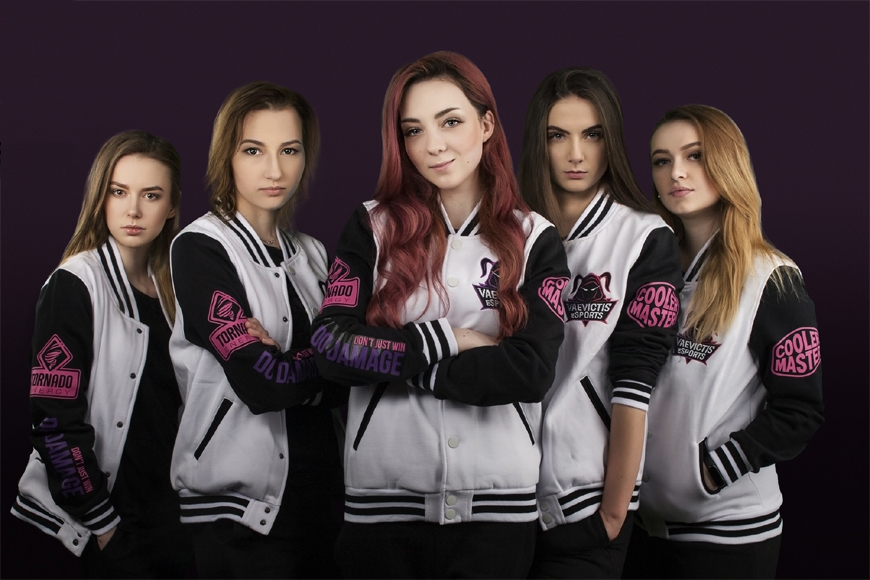
All-female professional LoL team Vae Victis eSports (Image courtesy of Esports News UK)

    Firstly, in order to understand the marginalization of women in gaming, it is important to analyze the place of a man in this context in order to try and derive the branching point between the two. If you think of the terms “manly” or “heroic”, words such as strong, brave, or even womanizer may come to mind. The term “geek” does not align with any such term, instead invoking mental images of social ineptitude and poor hygiene. The term geek entails two critical connotations: accelerated smarts to compensate for a lack of braun and an affinity towards fantasy over reality. Salter and Blodgette point to common geek representations such as the Big Bang Theory and a questionaire by The Armory to demonstrate how the term geek is perceived in these ways, and how men have come to adopt this term as their own. They show that it would only make sense then that the world of video games would be an incredibly potent attractor for all who tag themselves with geek on their identity. In worlds where braun and social ability don’t matter, geeks can find a fulfillment they would have never been able to otherwise. Finally, their brainpower is a metric worth something of value, their lacking physicality is no detriment, and geeks can finally embody the heroes they could only dream of being.
    What does this mean then, for the woman who is also a geek? Would she find a place in her identity amongst endless libraries of story-based and expansive role playing games portraying white, male, entities of war and conquest such as Doom, Halo, or Call of Duty? Or similarly, would she identify with games where our hero’s only end goal is to be a savior to the damsel in distress in series’ such as Super Mario or The Legend of Zelda? Certainly not here, since there are so few heroes which any girl could identify with, should she venture to embody them by playing. Game developers of old and even in the modern day recognize the allure to geeks of the worlds that they create, specifically of men, capitalizing and profiting off of the desperation of these men to become “manly”, or at the very least, to feel “manly”. Again, Salter and Blodgette extend upon this point by demonstrating how the white man is gaming’s default avatar, pointing to games such as Duke Nukem. It is in this way that these sorts of games are not made for gamers, but for men.
    If not in story driven games such as these, maybe in games with established competitive aspects? This would include first-person shooters like Overwatch or Valorant, MOBA’s such as Dota 2 or League of Legends, fighting games such as Tekken or Street Fighter, strategy games such as Pokemon or Magic The Gathering or even games not inherently competitive through activities such as speedrunning or tournament play in games like Portal, Tetris, and the entire rhythm game genre. These games sport competitive communities targeted towards, and in turn, populated by geek men, still desperate to prove their worth against the normal definitions of manly in the only way that they possibly can: through intellectual or physically unintensive shows of skill. Salter and Blodgette dive deeper, again analyzing The Big Bang Theory and The Armory to show how men vie for intellectual superiority in their struggles to carve out a counter-cultural masculine identity for themselves. A woman would certainly not be welcome here, as the men present are animalistically territorial. This is the only space where many geek men can find excellence within themselves. If a woman were ever to demonstrate higher proficiency than her male counterpart, the man would be exiled again from their achievements of intellectual and executional proficiency, by a girl nonetheless. These communities are viciously gate kept from women in order for the men there to preserve their fragile egos.

EVO Championship Fighting Game Tournament (Image courtesy of EVO.gg)

    Therefore, the library of games for women has been whittled down to low-skill, low-intensity leisure games, including sandbox games such as Animal Crossing or Minecraft, simulation games such as Powerwash Simulator or The Sims, simple puzzle games such as Candy Crush or Sudoku, AFK Tycoons such as Cookie Clicker or Clash of Clans, and other games of the sort. Certainly a woman could be comfortable in her identity as a gamer here, right? Not even close, as the same desperate men who don the word “geek” as their mainstay must again guard their sense of identity by disparaging these games, claiming they’re not real because they don’t necessitate commitment or talent. They say to be a gamer is not simply to play games, but to live games, to breathe games, and above all, to be good at them, as that is the thing which gives them worth as a gamer. If it takes nothing to be good at your game, then it means nothing to be good at your game, and there’s no way you can be a gamer if these are your games of choice.
    As a young, naive boy who was neck deep in the perils of discovering one’s own identity at that age, there were two identifiers in particular that had cemented themselves within my psychology even back then: “boy” and “gamer”. I’ve never considered myself to be particularly attached to any given grouping or archetype that I exemplify, even as a little one. Despite that, as my young self was sitting in an airport terminal waiting for a flight one afternoon, my attention was immediately drawn to a documentary that they had playing on one of the televisions, as the documentary was talking about gaming. Specifically, the documentary was addressing women in gaming culture, and on that day I was made privy to a statistic that has never left my mind since. The documentary aimed to refute claims that gaming was not for women by asserting that the ratio of gamers based on gender was close to 50/50, but that was only if they included mobile games. If they didn’t, then the “expected” ratio held true, the majority of gamers being men. The documentary spokesperson smiled, saying things to the effect of “so gamer girls do exist!” and “mobile games are real games!” At that moment, I stopped watching the documentary as my horribly naive self, almost a little annoyed, determined that the documentary had no idea what it was talking about. “Those girls aren’t gamer girls,” I remember thinking to myself.
    I stand today a little bit older, hopefully a little bit wiser, but no less bothered by the statistics, obviously for different reasons. While I don’t know how valid or scientifically based the documentary I saw was, it has still left a severe impact on me as an aspiring game developer. In my own observations, there seems to be a severe lack of women present at the upper echelon of competitive eSports. One of my favorite games is Super Smash Brothers Ultimate, and the majority of the women I have either played the game with or seen playing, in a game that has almost 90 characters to choose from, only a few are prevalent: the “princess” characters, such as Zelda or Palutena, the “baby-mode” characters such as Yoshi or Kirby, or the “cute boy” characters such as Ike or Cloud. I would assume that the technical limitations and higher accessibility of mobile games incentivize mobile developers to jump at making non-expansive games sporting high levels of reward and low-skill ceilings. The glass ceiling in the gaming community and industry has crystallized to be bullet-proof, and it is not only on gamer guys, but on game developers as well to usher in a new definition of what it means to be a gamer - one that lets girls be gamers too.

Sources:
Salter, Anastasia, and Bridget Blodgett. “Come Get Some: Damsels in Distress and the Male Default Avatar in Video Games.” Toxic Geek Masculinity in Media, 2017, pp. 73–99., https://doi.org/10.1007/978-3-319-66077-6_4.
Salter, Anastasia, and Bridget Blodgett. “Introduction: Actually, It’s about Toxic Geek Masculinity….” Toxic Geek Masculinity in Media, 2017, pp. 1–16., https://doi.org/10.1007/978-3-319-66077-6_1. 

Tuesday, February 21, 2023

Cyborg vs The Hacker: Technicity and Intersectional Identity in Geek Culture

By Gabriela Sanchez

The idea of a “computer nerd” has long conjured the image of a white, male, hacker; just frustrated enough by the real world to venture into creating his own. But this image, though familiar, and arguably cool, does little to express the full breadth of diversity that Geek culture encompasses. In fact, as more and more black, indigenous, and people of color seek representation, the more and more problematic this image becomes. In this article, we will be exploring instances of the “cyborg” archetype in contrast to the hegemonic image of the “hacker.” Our focus will be on Victor Stone, who we will examine as a model of technicity in pop media that expressly advances the mainstream consciousness of technoculture as populated by people other than reclusive, white men.
Victor Stone/Cyborg of DC’s Teen Titans and Justice League (Image courtesy of DC Comics) 

According to Jonathan Dovey and Helen W. Kennedy, experts in the field of technoculture, the archetypes of “Hacker” and “Cyborg” first appeared simultaneously in the mid-1980s, and are “paradigms of technicity;” acting as “positive models of technicity” for critics and consumers alike. The image of the “Hacker” thus represents the pseudo-elite of the technologically inclined. Hackers are seen as highly skilled, early adapters of tech, whose work in the cybernetic world is seen as ubiquitously advancing society toward a technologically advanced, utopian future. But as Kennedy and Dovey note, this image is problematized by the implicit requirements of wealth and access necessary to participate in hacker culture. Hackers also occupy spaces that are “almost exclusively white as well as exclusively male.” Juxtaposed against this archetype, however, is the Cyborg; an aspirational view of humanity’s relationship with technology as capable of facilitating “a fluid zone of identity affiliation and agency” capable of disrupting the systems of white power which threaten to colonize the new cyber-frontier. However, as attractive as the cyborg archetype might seem at first glance, it is important to note that it too has been problematized by pop-media appropriations of the Cyborg image. Such appropriations can be seen in films like The Terminator (1984), and more recently, in Marvel’s Iron Man (2008) which depict cyborgs as militarized, hyper-masculine beings capable of grand-scale destruction. These representations however are not exhaustive.

 
As gamers, nerds, and geeks alike seek further representation in the media that they consume, we have seen a reinvigoration of the cyborg image as one more informed by its negotiations with intersectionality than its function as a force of destruction. The most interesting of these depictions, in my opinion, is that of Victor Stone, better known as Cyborg from DC’s extended universe.
Victor Stone/Cyborg of DC’s Teen Titans and Justice League (Image courtesy of DC Comics)

Before becoming Cyborg, Vic Stone was just a young bright, black man passionate about football. The son of two successful scientists, his future seemed promising, that is until tragedy strikes in his parents’ lab. A portal to another dimension brings a violent monster into the lab killing Vic’s mother and nearly killing Vic as well before his father Silas is able to send the creature back from whence it came. In a panic to save his only son, Vic’s father Silas reconstructs his son’s body with materials from his lab, and Victor’s new identity is born.

 
Though there are various iterations of Cyborg’s story, in each version the themes of race, ability, and humanity can be seen taking center stage. Unlike other supers, Vic is forced into his power at the cost of his humanity and his aspirations of a career as a professional athlete. In Vic, the image of the Cyborg is complicated by conflicting experiences of ability, and privilege. Unlike the Terminator, Vic’s power inhibits his ability to fulfill his imagined destiny, and unlike Iron Man, Vic’s body is not passably human, nor is he able to remove his super-suit. In this way, Victor, or Cyborg, serves to challenge the white-male hegemony that proliferates Geek culture and he does so by suggesting a relationship between nerd and computer that extends the self through technology as opposed to extending oneself into technology. In other words, Victor reminds us as viewers of the duality of machines and the role they play in our societal advancement. Both a victim and a hero, DC’s Cyborg is continuing to honor the tradition of the “Cyborg” image as an agent for creolizing technological culture. In his blackness, in his youth, in his humanity, and in his complex relationship with the machinery that both enables and disables him, Victor Stone offers consumers a new iteration of the “Cyborg” archetype; one that makes room for all at the table of nerdiness and geekdom.

 
References: The Player’s Realm: Studies on the Culture of Video Games and Gaming https://www.academia.edu/3729994/The_Players_Realm_Studies_on_the_Culture_of_Video_Games_and_Gaming

Monday, November 15, 2021

Ignite your passion for gaming...and...drinking?

Gaming is an expansive hobby among both children and adults, yet at least in the United States, there has historically not been a lot of places for adults interested in gaming and other forms of geek culture to congregate and socialize. In the past there were arcades but with gaming shifting to home gaming consoles and personal computers, the need and desire to go out to play dwindled. In some developing countries, internet cafes had large rises to popularity with limited internet access and computers at home, with their popularity often persisting even after homes were brought online. 

”Speed Show: Drifting Internet Café,“ created and directed by Sun Xiaoxing, 2016. Photo credits: Zhou Nengneng

While internet cafes have seen fewer successes in the United States, gaming bars have found a few hits of success just like the arcade bars before and alongside them. The split focus allows for a community of adults to form who may not necessarily feel as comfortable in other social drinking venues or who just prefer to game and want to get together with friends. Beyond that, the drinks can be used as an alternative form of income rather than hourly charges which customers may not be as willing to pay if they already have the games at home. There’s also unique opportunities for combining the characteristics of bars and games and simply working to bring together a community.


Ignite Gaming Lounge


There has been a successful gaming lounge in Chicago for over 10 years, Ignite Gaming Lounge, which offers many types of games alongside basic snacks. It brought together the local gaming community, gathering many loyal fans, hosting events, and providing a place for gamers to connect. It has done well enough to open up a second, much larger, location in Skokie, IL, which added proper food and a full bar to their menu. This second location also has dedicated rooms for larger events, helping to further grow the local LAN and other meetup community. 


There are a lot of challenges to opening and running a gaming bar or lounge, but with the right amount of work, the rewards of doing so can quickly be seen. In the PAX East 2014 Panel, “The Rise of the Geek Bar”, the panelists shared their experiences with drinks and the interesting connections that can be made, with the possibilities being endless. The Ignite Gaming Lounge’s Skokie menu is the perfect example of this, not only being composed of low-poly pixel art depictions, but having cocktails like “Nuka Cola Quantum”, “Metroid Margarita”, “Ignite Potions”, and more. They have also expanded this to food items like the “Triple Kill” and “Mushroom Kingdom” pizzas or the “Buffalo Chocobo” sandwich. Everyone can appreciate creative drinks and food, but when it connects to a subculture you’re interested in, especially if it’s not commonplace, it can be quite exciting to see. As the panelists discussed, some customers would always come and try every drink when the menu changed. It also seems these creative concoctions may help broaden the scope of the bar to even larger audiences as one Google review for the Skokie location mentioned, “friends liked the gimmicky alcoholic drinks they served and had a great time”, helping to indicate the combination is key to the location’s success.

Excerpt from Ignite Gaming Lounge's drink menu 

The panelists also mentioned the enthusiasm they found patrons having when opening or with every event and how they all had ideas to share. The feedback on Ignite Gaming Lounge has been consistent with this, with people super excited when they see the venues, wanting to try everything out. This showcases the desire for these communities to form. The Attendee on Youtube created a video about their experience at Ignite Gaming Lounge in Skokie and offered insights into gaming lounges, explaining how they appreciate the local meetups and connections these types of venues enable. It seems this deep sense of a “geek” community has proved successful, with a panelist in the panel mentioning how he has never had a fight break or a controller stolen. 


Example event hosted at Ignite Gaming Lounge

In the end, it may be easy to leave games in the living room or office and just not partake in bar or club culture, but it would be great to not have to miss out on both. Gaming bars and lounges like Ignite Gaming Lounge and those owned by the panelists can help bridge these two previously separate worlds, providing new exciting and accepting spaces for not only gamers and geeks, but others as well. The excitement is there, as seen by Google reviews like “i really love ignite the vibe is just so chill” and “It's the best place to hang and geek out about your favorite whatever”. Just like the panelists said, start with your passion and what you feel comfortable with, “do that thing” and you will find other people that enjoy that thing as well. In this case, it’s a bunch of gamers and geeks also looking for a place to fit in.


Bloch, Matt, “PAX East 2014 Panel - The Rise of the Geek Bar” YouTube Video, 1:04:10, April 18, 2014, https://youtu.be/RDTjWGaaUfg


Alcohol and Video Games: A Cocktail of Potential

 The popular social settings have changed for every era in time, and all have tried to cater to universal audiences. Over the years, places such as diners, discotheques, jazz clubs, and raves have been the hot places to go to and socialize, especially at night when the younger demographic is raring to explore and have a good time. When it comes to popular spaces for geek culture, however, choices have remained overall limited. Back in the era of arcade cabinets, when Galaga and Miss Pac-Man dominated the market, the most exciting places for gamers and geeks to hang out with other like-minded individuals were in arcades, which luckily were all the rage at the time, so gamers had many choices of where they could go and play and meet new people. However, since then, even with the decline of arcade games, arcades still remained one of the only large public spaces where anyone could go in and play video games with friends or strangers. The introduction of home consoles also contributed to this in a big way, to the point where the best way to play games with friends was to get a multiplayer console and simply invite people over. After that, online compatibility was introduced, and gamers no longer had to be in the same room to play games with each other. Although an admittedly incredible feat which revolutionized multiplayer gaming and interaction, this did make for even more stagnation when it came to developing large public spaces for gamers. Going from arcades to split-screen co-op to online co-op made it so the only remaining spaces were either specifically organized gaming events, such as conventions or tournaments, or arcade sections of bowling alleys usually containing only Dance Dance Revolution or Pac-Man.

This does not even bring into consideration the tabletop RPG community, who have unfortunately been confined to private sessions in their own homes or the basements of their local game shop.


    In recent years, however, a new space has been created that attempts to combine the social pastimes of the general public and the gaming community: gaming bars. One of the most popular social lubricants for decades has been alcohol, and regardless of your stance on that, it is impossible to deny that much of the success of raves, clubs, and obviously bars is the combination of a fun social atmosphere and drinking. With the ever rising popularity of bars, especially with the current generation, some sought out to create bars with heavy gaming focus and elements, to give a newfound sense of community for this generation of gamers and geeks while keeping the mass appeal of a late-night bar.


This is not to say that video games have not existed in bars before. In 1971, an arcade game was installed in a bar near Stanford University, and Goldie’s Bar in 1981 had a test cabinet of Donkey Kong that ended up working majorly to its advantage after the massive success of the game. However, those were just bars with one or two arcade cabinets installed in the corner, where a patron could walk on over and play a game in relative solitude from the rest of the crowd. These new gaming bars fully embrace the theme of gaming, with it being not just the focus, but the main appeal. One gaming bar, 42 Lounge in Milwaukee, went even further by not just including several popular games like Street Fighter and Smash Bros, but also holding events for other facets of geek culture, like tabletop gaming, e-sports, and nights centered around shows and movies like Doctor Who, Harry Potter, or Star Wars.

Most of the owners of these arcade bars were inspired by all the things I mentioned above: creating a social space for a gaming audience but making it accessible to a wider demographic. One owner in particular mentioned the stereotypes surrounding gaming culture and nerdy spaces, and how adding the appeal of a bar to them would help to normalize them in today’s society and make them mainstays in social culture.

Regarding the stereotypes, they do absolutely have a point. Before, since arcades were obviously meant to serve a single purpose—house arcade games—only gamers (mostly boys) were expected to be populating them. Gaming culture as a whole being considered a breeding ground for lonely male misogynists by the general public has understandably damaged the general outlook on gaming spaces, and it is obviously not a completely misguided point of view considering the toxicity pervasive in the culture. However, these new gaming bars work to create a more accepting space for gamers and non-gamers alike, focusing more on the more socially comfortable environment that a bar provides for many and letting people explore their interests with like-minded people they are likely to get along with. One owner described it as a “showcase of how far the gaming community has come, where stereotypical and non-stereotypical gamers could coexist with each other and have a good time bonding over shared interests.”


Unsurprisingly, reception for most of these gaming bars has been overwhelmingly positive. Adult gamers seem to be very satisfied with having a new, hot social location where they can hang out on a Friday night, drink, and meet new people, while also being able to partake in an activity that is more comfortable for them. Most gaming bar owners were surprised by the popularity of their bars, especially with most of their advertising being done through word of mouth in the beginning. All patrons, regardless of if they chose to game or not, were welcomed as long as they were somehow contributing to the revenue of the bar through drinks or beverages.

It seems as though the gaming bar has in many ways accomplished what it set out to do, create a common safe space for gamers and non-gamers to interact and explore new interests. More and more of these bars are opening up in cities, with more entrepreneurs wanting to explore their own vision of an adult gaming space for the masses.


Works Cited

Bloch, Matt, “PAX East 2014 Panel - The Rise of the Geek Bar,” YouTube Video, 1:04:10, April 18, 2014, https://www.youtube.com/watch?v=RDTjWGaaUfg.


Bass, Penelope. “The Evolution of Arcade Bars.” Imbibe Magazine, August 26, 2020. https://imbibemagazine.com/arcade-bars/.

Monday, November 8, 2021

Followers from one streaming platform don’t always mix well with another

In August 2019, a little over two years ago, streamers Ninja and Shroud signed an exclusive contract with the Microsoft-owned streaming platform Mixer. Their contracts were rumored to be $30 million and $10 million respectively (Patel 2020). On July 22nd, 2020, about a year later, Mixer shut down services. Insiders claimed that the two pushed for and received a full payout for their contracts, though I could not find a credible source for this claim. What I can verify is that these contracted streamers were able to move on to other platforms with relative ease and began negotiations for new exclusive-contracts.


This happy ending does not extend to everyone who was a streamer on Mixer. Leckakay, who now streams on Twitch, was in the middle of streaming on Mixer when she received the news that Mixer was shutting down (D’Anastasio 2020). In fact, the majority of Mixer partners, streamers, and viewers found out at the same time. It was in the form of a tweet sent out on June 22nd, 2020 by Mixer’s official account. They gave streamers a one month warning that they either had to move to their new partner, Facebook Gaming, or figure something else out.

(An picture of a red stand-mixer)

Streaming in Character

               The article The Affective Labor and Performance of Live Streaming on Twitch.tv looks at some of what streaming entails, from how streamers interact with their audience, to the basic idea of doing something that, in theory, is simply intended as entertainment for work and labor.


Monday, October 25, 2021

Overcoming The Odds: "When Rivers Were Trails and Indigenous Storytelling

An important point we’ve been discussing is Native American representation in modern game culture, and just in general. In the American games industry especially, the library of games containing genuine representation designed by indigenous people is unfortunately scarce and overlooked due to the low participation of indigenous people in the games industry and the hugely oversaturated market of indie games. As we talked about before as well, a lot of times when a game with an indigenous focus and background is envisioned, the lack of resources can stand in the way of aspiring indigenous creators from finding each other and being able to support the grueling process of game development long-term.

However, the indie games that have been fully developed by indigenous lead designers and developers have sought out and to capture and immerse a player in an experience that captures the Native American lifestyle and history as accurately as possible, and in most cases are successful in that goal. Such is the case in When Rivers Were Trails, a 2D point-and-click game exploring the journey of an Anishinaabe tribe moving from Minnesota to California due to the Native American displacement and land allotment laws set in place in the 1890s.


The game was created as a collaboration with the Indian Land Tenure Foundation and Michigan State University’s Games for Entertainment and Learning Lab specifically to create a game where the Native American experience in the old Midwest could be accurately showcased and taught. The project was able to successfully see itself to completion thanks to over 30 indigenous creators ranging from writers, artists, and musicians contributing to give the game authentic Native American representation from all angles. The game was creatively led and designed by two Indigenous individuals, and the gameplay and art was led by an Anishinaabe game designer.
The game contains lots of familiar gameplay elements to other point and click predecessors, most notably The Oregon Trail, having minigames for fishing, travelling, hunting, and canoeing. In addition however, as a point-and-click, When Rivers Were Trails relies heavily on its storytelling and dialogue to weave interesting stories for players to engage in. The game has several different stories for players to play through, and new stories are unlocked through gameplay and player progression. Over 30 indigenous writers contributed to the creation of the historical stories, with each one giving a fun and informative (and most importantly, accurate) glimpse into the life of indigenous tribes in the US as the Anishinaabe tribe travelled across the country and overcame several obstacles on their way. As well as progressing the overall plot of the game, each story would often seek to encapsulate and illustrate an aspect of indigenous living at the time, such as gathering, hunting, intertribal relations, illnesses, and their vibrant culture. Dialogue frequently includes indigenous language, which is not often represented in video games, even those that feature indigenous characters in their plot.

       
        With a majority of the game’s direction being decided by Indigenous creators, the game manages to keep established gameplay elements engaging while delivering several stories that stay heavily grounded in realism, most likely due to the fact that most may very well have been based directly on real events. That being said, as we have talked about earlier on this blog, there can be a huge benefit to also having non-indigenous creators on the team, as they could learn more about how to design an inclusive game by working firsthand with the lead designers and cooperating with them. When Rivers Were Trails does indeed include a diverse team of several ethnicities and backgrounds in order to positively represent an environment with an indigenous creative team at the helm. All workers were paid industry standard rates as well, and were given equal spaces in which to create their combined vision, which is a huge deal in the games industry. When Rivers Were Trails is a stellar example of an environment where indigenous creators were able to finally take the reins and create a work of art that tells legitimate stories about their cultures and past, and should be considered a huge symbolic step for the games industry.

Works Used:

LaPensée, Elizabeth A, Outi Laiti, and Maize Longboat. “Towards Sovereign Games.” Games and Culture, (June 2021). https://doi.org/10.1177/15554120211029195.


“When Rivers Were Trails by Indianlandtenure.” itch.io. Accessed October 24, 2021. https://indianlandtenure.itch.io/when-rivers-were-trails. 


“Historical Stories.” When Rivers Were Trails Wiki. Accessed October 24, 2021. https://whenriversweretrails.fandom.com/wiki/Historical_stories. 

Indigenous Futurism, New Worlds for Future Generations

The Haudenosaunee have a core value they call the Seventh Generation. Their philosophy is that the decisions we make today ought to result in a sustainable world seven generations into the future, taking into consideration those who will one day inherit our world. Integral to this value is the protection of cultural practices, ceremonies, and languages, which can then be passed down through generations [1]. But when faced with headlines like “Two Indigenous languages are dying every month” [2], the question of how current and future generations will uphold Indigenous cultures teachings and customs becomes imperative.

Digital media, including games, may be a space to explore answers to such a question. Not only does digital media offer a way to look back on the histories of indigenous cultures around the world, they also are a space to imagine the future (see Figure 1). Indigenous futurism, inspired by the Afrofuturism movement, reimagines stereotypical tropes of indigenous peoples and explores alternate histories and futures in a variety of mediums. The indigenous game designer Dr. Elizabeth LaPensée, a scholar of Anishinaabe and Métis descent, describes indigenous futurism as “[looking] to those who came before us to inform the present with hope for future generations” [3].

Figure 1. The animated film "She Falls for Ages" by artist Skawennati is an example of Indigenous Futurism. It is a science-fiction retelling of the Haudenosaunee creation story, reimagining Sky World as a futuristic utopia with Sky Woman as a world-builder (Vimeo).

Dr. Grace Dillon, Anishinaabe scholar and Dr. LaPensée’s mother, coined the term Indigenous Futurism. In her edited anthology of Indigenous science fiction, Dillon describes Indigenous futurism as “… narratives of biskaabiiyang, an Anishinaabemowin word connoting the process of ‘returning to ourselves,’ which involves discovering how personally one is affected by colonization, discarding the emotional and psychological baggage carried from its impact, and recovering ancestral traditions in order to adapt in our post-Native Apocalypse world”[4]. Integral to Indigenous Futurism are Indigenous creators, because the concept requires Indigenous perspectives to create awareness of how tribal philosophies and cultural knowledge are connected to science, the universe, and the future.

Figure 2. Diné artist Ryan Singer's "Sand People, Sand Painting" depicts characters from the Star Wars movies inside a Navajo hogan, while taking part in a traditional healing ceremony. The work is part of an online exhibit “Indigenous Futurisms: Transcending Past/Present/Future” at the IAIA Museum of Contemporary Native Arts.

Indigenous video games are one medium in which Indigenous Futurism can be explored.  Achimostawinan Games is an Indigenous (Métis and Néhiyaw) owned indie game studio in Canada. The studio strives to have a team of 51% or more Indigenous staff. Their current project is Hill Agency, an Indigenous cybernoir detective game. The world within Hill Agency looks at the critical question: “what would our world look like on the brink of freedom from colonial oppression?” [5]. In the game, the main character is Meeygun Hill, a Private Investigator in the slums of one of the last major cities in North America, Akâmaskiy, who is charged by her client Mary LaPensée to solve her sisters’ murderer. Hill Agency’s story follows the genre of narrative detective games where the player interviews witnesses and suspects, collects evidence for the case, and makes accusations.

Figure 3. Meeygun Hill (left) and her client Mary LaPensée (Kickstarter)

All characters in the game are Indigenous, and to prevent cultural and cross-nation appropriation, the team at Achimostawinan Games pledge to only design characters representing their own nations (if they find representing other nations/communities is necessary, they will reach out to ensure appropriate representation within the design of the game) [6]. Their advisory council are Indigenous creatives who work within the realms of digital and fine art. The design team also pledged to follow the On-Screen Protocols & Pathways Guide [7], a media production guide to working with Métis, Inuit, and First Nations communities, narratives, and concepts.

Figure 4. The metropolis of Akâmaskiy (Kickstarter)

Hill Agency started as a DMG Feb Fatale Game Jam prototype, first shown at imagineNATIVE Film + Media Arts Festival, but a polished prototype (retitled Hill Agency: BARK & byte) and the full production of the game requires $660,000 CAD in funding. Achimostawinan Games is currently trying to obtain funding streams, including grants, but has also placed the game description and breakdown of associated costs on Kickstarter [6] to hopefully bring the game to life for wider audiences. The latest update showed that they received that funding (though not through Kickstarter) and will be creating the whole game for release in Fall 2022! [8]

As conversations about Indigenous futurism continue to gain traction, it is essential to support initiatives that emphasize the revival of Indigenous languages, histories, and futurism within Indigenous cultures and challenge the structural hegemony within the status quo, especially in digital media and games.

-Sarah

[1]. https://www.haudenosauneeconfederacy.com/values/

[2]. https://news.un.org/en/story/2019/12/1053711

[3]. https://achimogames.ca/about/exploring-indigenous-futurism/

[4]. Dillon, G.L. (2012). Walking the clouds: An anthology of indigenous science fiction.

[5]. https://achimogames.ca/about/exploring-indigenous-futurism/

[6]. https://www.kickstarter.com/projects/1678114327/hill-agency-bark-and-byte

[7].https://www.creativebc.com/database/files/library/imagineNATIVE_on_screen_protocols_and_pathways_5_15_2019.pdf

[8]. https://www.kickstarter.com/projects/1678114327/hill-agency-bark-and-byte/posts/3182241